
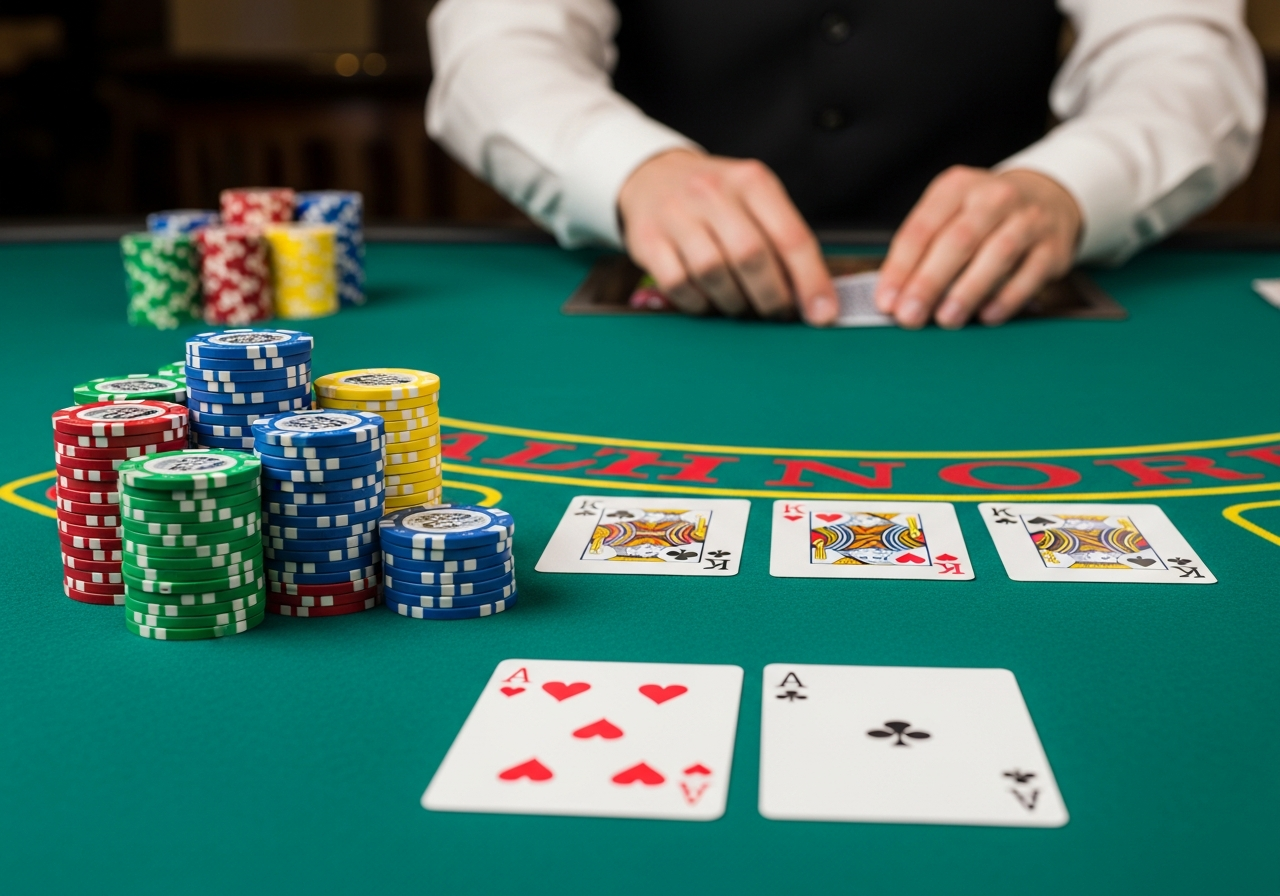
Indian poker players have faced a dramatic shift in their gaming landscape. Until August 2025, platforms like PokerBaazi, Spartan Poker, Adda52, and MPL Poker served a rapidly growing online poker community, offering multiple variants and stakes in a regulated, accessible format. Today, the introduction of the Promotion and Regulation of Online Gaming Bill has fundamentally changed where and how Indian players can legally engage with real-money poker.
This guide bridges that transition by explaining the rules of every major poker variant that Indian players are likely to encounter—whether in live casino rooms in Goa and Sikkim, private games at home, or free-play applications. Understanding these rules is essential because the fundamentals remain identical whether you’re playing online or live. What has changed is the legal framework, the venues, and the operational mechanics. By learning the variant rules in detail and understanding today’s legal landscape, you can make informed decisions about where to play and how to compete fairly and responsibly.
Poker in Indian Casinos and the Shift from Online Rooms
For nearly a decade, India was a fast-growing market for online real-money poker. Domestic operators licensed under state regulations (particularly Goa and Sikkim) and overseas platforms attracted players from every region, creating a diverse ecosystem of cash games, tournaments, and multiple variants at accessible stakes measured in Indian Rupees.
In August 2025, the federal government implemented a comprehensive ban on real-money online gaming, including poker, fantasy sports, and rummy. This legislation prohibited Indian operators from offering real-money poker services and restricted access to offshore sites. The impact was immediate: major domestic poker rooms ceased operations, and the landscape shifted dramatically. Legal real-money poker for Indian players is now confined to live casino environments—land-based casinos in Goa and Sikkim, and offshore vessels—where state gambling regulations permit table games. Additionally, private home games that comply with applicable state laws remain unaffected by the federal ban.
The critical point for players is this: the rules of poker variants have not changed. Texas Hold’em, Omaha, Stud, and other games follow identical betting structures and hand rankings whether played online or live. What differs is where you can play legally and for real money, the operational procedures at the table, and the rake or fee structure. Free-play poker apps and social games also remain available, offering excellent venues to learn and practice the rules without financial risk.
Legal Landscape for Poker Variants in India
The August 2025 Promotion and Regulation of Online Gaming Bill introduced a blanket prohibition on real-money online gaming in India. The legislation does not distinguish between skill-based and chance-based games at the federal level; poker, despite its skill component, falls under the ban alongside other gaming formats.
As a result, Indian operators previously offering legal poker services have ceased operations. Players seeking real-money poker now have three legal pathways: (1) live casinos and land-based gaming establishments in states like Goa and Sikkim that have their own gambling regulations; (2) private games played in compliance with local state law (many states have carve-outs for home games); and (3) free-play or play-money applications and social games, which remain entirely legal since no real money changes hands.
The rules of each poker variant function identically across all these settings. The difference lies in enforcement, table management, and financial settlement—handled by live dealers and casino staff rather than automated software.
Where Indian Players Encounter Different Poker Variants
In today’s environment, Indian players are most likely to encounter various poker variants in three contexts: live casino poker rooms (both cash games and tournaments), private games played at home or in social settings, and free-play mobile applications.
Live casinos in Goa and Sikkim typically run Texas Hold’em as their primary variant, often in No-Limit and Pot-Limit formats across multiple stakes. Omaha (usually Pot-Limit) is increasingly common at mid-stakes and higher tables. Stud and Draw variants are less frequently offered in public casino rooms but may appear in mixed-game formats or specialized tournaments.
Private games, influenced by what was historically available online, might include any variant but commonly feature Hold’em, Omaha, and casual variants like Indian Poker. Free-play apps serve as excellent learning tools and often showcase the same variants—Hold’em, Omaha, Seven-Card Stud, and others—at play-money stakes. Rule knowledge gained in one setting transfers directly to another; the variant mechanics are universal. What varies is house rules, stake levels, and operational procedures.
Core Poker Concepts Every Indian Player Must Know First
Before diving into specific variants, every poker player needs to master foundational concepts that apply across nearly all games. These building blocks—hand rankings, betting actions, position, blinds, and the structure of a betting round—are the same whether you’re playing online, in a casino, or at home.
| Concept | What It Means | Why It Matters in Indian Casinos |
|---|---|---|
| Standard Deck & Hand Rankings | 52 cards; hands ranked from Royal Flush (highest) to High Card (lowest). | All variants use these rankings unless explicitly stated as a lowball game. Knowing the hierarchy instantly is essential for live play where you act quickly. |
| Blinds & Antes | Forced bets posted before cards are dealt (blinds in most games; antes in Stud). Small blind is half the big blind; ante is smaller still. | Indian live casinos use fixed blind levels for cash games (e.g., ₹100/₹200) and escalating levels in tournaments. You must understand when you post and who owes what. |
| Betting Rounds | Structured phases where players bet, call, raise, or fold in order. Most games have 1–4 betting rounds per hand. | Live play moves at a fixed pace. Knowing when each round ends and the next begins prevents costly delays and disputes. |
| Position (Button, Small Blind, Big Blind) | Player locations relative to the dealer button. Button (dealer) acts last preflop; earliest positions are under the gun (UTG). | Position determines when you act. Late position (button, cutoff) is advantageous; early position is disadvantageous. This affects which hands you should play. |
| Betting Actions (Check, Bet, Call, Raise, Fold) | Check = pass without betting (if allowed); Bet = initiate a wager; Call = match a bet; Raise = increase the bet; Fold = quit the hand. | Live dealers require clear verbal announcements or chip motions. Ambiguous action can be disputed. Always communicate clearly. |
| Table Stakes & All-In | Your chips in play equal your maximum bet; if you run out, you’re all-in but can only win up to what you’ve wagered. | Indian casinos follow table stakes rules strictly. You cannot add chips mid-hand or go into debt. Protect your stack. |
Standard Hand Rankings and Betting Actions
Poker hand rankings are universal and immutable. From highest to lowest: Royal Flush (A-K-Q-J-10, same suit), Straight Flush (five consecutive cards, same suit), Four of a Kind, Full House (three of a kind plus a pair), Flush (five cards, same suit), Straight (five consecutive cards), Three of a Kind, Two Pair, One Pair, and High Card.
In most variants, the highest hand wins. In lowball variants (like Razz), the hierarchy is inverted: the lowest hand wins. Always confirm the game format before playing.
Betting actions follow a clockwise sequence starting from the player after the blinds (in Hold’em) or from the bring-in player (in Stud). Each player in turn must check, bet, call, raise, or fold. The round ends when all remaining players have either folded or matched the highest bet, and no one wishes to raise further.
Texas Hold’em Rules in Indian Casino and Online Formats
Texas Hold’em is the dominant poker variant worldwide and was the most played format in Indian online rooms before the 2025 ban. It remains the flagship game in Indian live casinos, offered at most stakes and in both tournament and cash-game formats.
In Hold’em, each player receives two private cards (hole cards). Five community cards are revealed in stages: the flop (three cards), the turn (one card), and the river (one card). Players construct the best five-card hand using any combination of their two hole cards and the five community cards. Here is how a complete hand unfolds:
- Post blinds: Small blind and big blind post forced bets; the small blind is typically half the big blind. In Indian live casinos, common structures include ₹50/₹100, ₹100/₹200, ₹500/₹1000, and higher.
- Deal hole cards: The dealer distributes two private cards to each player, starting with the small blind.
- Preflop betting round: Players act in order starting from the player to the left of the big blind (under the gun). Each can fold, call the big blind, raise, or (if no bet is open) check.
- The flop: Three community cards are revealed. A new betting round begins with the first remaining player to the left of the button.
- The turn: A fourth community card is revealed. Betting continues with potentially higher stakes (bet sizing often doubles here).
- The river: The fifth and final community card is revealed. A final betting round occurs.
- Showdown: If multiple players remain, they reveal their hole cards. The player with the best five-card hand wins the pot. If all players fold before showdown, the last remaining player wins without revealing.
Key Hold’em Betting Structures and Indian House Rules
Hold’em is offered in three primary betting structures, which differ in how much a player can bet or raise:
- No-Limit: A player may bet or raise any amount up to their entire chip stack at any time. This is the most common format in Indian casinos and online rooms. It creates high variance and requires strong bankroll management.
- Pot-Limit: A player may bet or raise up to the size of the current pot. This creates a middle ground between Fixed-Limit and No-Limit. It is less common than No-Limit in Hold’em but more standard in Omaha.
- Fixed-Limit: Bet sizing is predetermined. In a ₹50/₹100 Fixed-Limit game, all bets and raises in early rounds are ₹50; in later rounds, they double to ₹100. This variant reduces bankroll swings but is rarely seen in modern Indian casinos.
Indian live casinos predominantly offer No-Limit Hold’em. Tournament blinds typically escalate every 15–30 minutes, following schedules like 25/50, 50/100, 100/200, 200/400, 500/1000, and beyond. Cash games often maintain fixed blind levels throughout the session. Buy-in ranges vary by room but commonly span from ₹500 minimum up to ₹50,000 or higher at premium tables.
Strategic Basics for New Hold’em Players in India
New players often make costly mistakes by playing too many hands, chasing draws without proper odds, and ignoring position. Here are essential guidelines:
Start by playing only strong hands—high pairs, high cards of the same suit, and connected high cards—especially from early position. As you approach the button, your playing range widens because you act last, gaining information before committing chips.
Avoid “calling too wide”—entering pots with marginal hands hoping to hit by luck. Poker rewards aggression and selective hand choice, not passive entertainment.
Adjust to live pace. Online poker moves quickly with automated action buttons; live games require you to make decisions within a time bank (usually 30–60 seconds). Pre-decide your strategy for common situations so you act confidently and efficiently.
Study your opponents. Live play allows you to observe physical tells—hesitation, chip handling, betting patterns—that inform your decisions. Online tools like HUDs (heads-up displays) are unavailable, so reading opponents becomes crucial.
Omaha and Other Community Card Variants
Omaha is a close cousin of Texas Hold’em but with a critical rule difference: each player receives four hole cards instead of two, and must use exactly two of those hole cards plus exactly three from the five community cards to form their final hand.
This rule dramatically changes the game. Because players hold more cards, more hands are possible, and hand strengths are higher. For example, in Hold’em, a pair might be the strongest hand; in Omaha, straights and flushes are far more common. The “must use two” rule is absolute and non-negotiable—it’s a frequent source of confusion for players new to Omaha.
| Variant | Hole Cards per Player | Key Rule Difference vs Hold’em | Typical Use in Indian Casinos |
|---|---|---|---|
| Texas Hold’em | 2 | Standard; use any combination of hole cards and community cards. | Primary format; offered at most stakes in cash and tournament. |
| Pot-Limit Omaha (PLO) | 4 | Must use exactly 2 hole cards and exactly 3 community cards; bet sizing capped at pot size. | Increasingly popular at mid-stakes and higher tables; favored for cash games. |
| Omaha Hi-Lo | 4 | Must use exactly 2 hole cards and exactly 3 community cards; pot split between best high hand and best low hand (if a low exists). | Less common; appears in mixed-game tournaments and specialized rooms. |
| Crazy Pineapple | 3 (then discard 1) | Deal 3 hole cards; on flop, discard 1 card; then play like Hold’em. Creates wild action. | Rare in Indian casinos; more common in private games. |
Omaha is almost exclusively played in Pot-Limit format in Indian casinos. No-Limit Omaha is extremely rare because the increased hand strength and four-card holdings lead to massive pots and frequent all-in situations that overwhelm the game.
How Pot-Limit Works in Omaha Games
In Pot-Limit betting, the maximum bet or raise is equal to the current pot size plus the amount you need to call. This sounds complex but is simple in practice.
Imagine a pot of ₹1,000 with a ₹100 bet facing you. To call costs ₹100. The pot now contains ₹1,100 (old pot plus the bet). You may raise up to ₹1,100. So your maximum raise would be to ₹1,200 (₹100 call plus ₹1,100 raise).
Pot-Limit caps bet growth while still allowing meaningful raises. This structure is ideal for Omaha because it prevents the monster pots and runaway all-ins that would dominate No-Limit Omaha. Pot-Limit Omaha offers fast action and large swings without the extreme variance of No-Limit.
Most Indian live casinos that offer Omaha run Pot-Limit games at stakes from ₹500/₹1,000 upward. The game demands stronger bankroll management and deeper understanding of hand rankings than Hold’em, so it is usually recommended only after you have solid Hold’em experience.
Stud Poker Variants and Draw Poker in Indian Settings
While community-card games like Hold’em and Omaha dominate modern poker, Stud and Draw variants remain important. Seven-Card Stud was historically the most popular poker variant and is still encountered in mixed games and certain tournaments. Draw poker variants like Five-Card Draw are less common in Indian casinos but are beloved in private home games.
- Seven-Card Stud: Each player receives seven cards—some face-down, some face-up—across multiple betting rounds. No community cards exist; your hand is built from cards dealt only to you. The best five-card hand from your seven wins.
- Seven-Card Stud Hi-Lo: A variant of Stud where the pot is split between the best high hand and the best low hand (if a qualifying low exists). Requires different strategy because the same player might not win both halves.
- Razz: A lowball variant of Stud where the lowest hand wins. Hand rankings are inverted—straights and flushes count against you; the ideal hand is A-2-3-4-5 (the “wheel” or “bicycle”).
- Five-Card Draw: Older variant where players receive five hidden cards, bet once, then exchange unwanted cards, and bet again. It is simpler than Stud but offers less information because no cards are visible until the showdown.
These variants are less frequently offered in Indian public casinos but may appear in mixed-game tournaments or private tables. Learning their rules enriches your poker repertoire and makes you a well-rounded player.
Seven-Card Stud: Deal and Betting Sequence
Seven-Card Stud uses antes instead of blinds. Before cards are dealt, each player posts a small forced bet (the ante), typically 5–10% of the small bet. In a ₹50/₹100 Stud game, the ante might be ₹5 or ₹10.
The dealing sequence follows:
- Third Street (Bring-in): Each player receives two down cards and one up card. The player with the lowest up-card must post a “bring-in” bet (usually half the small bet). Betting proceeds from that player. If multiple players have the same rank, suit order breaks ties (typically clubs < diamonds < hearts < spades, or as house rules specify).
- Fourth Street: Each remaining player receives one up card. Betting begins with the player showing the highest hand, proceeding clockwise.
- Fifth Street: One more up card dealt. Bet sizing typically doubles here (from ₹50 to ₹100 in a ₹50/₹100 game).
- Sixth Street: A fourth up card dealt. Betting at the higher limit.
- Seventh Street (River): Each player receives a final down card. Betting occurs at the higher limit. If more than one player remains, a showdown determines the winner using the best five-card hand from the seven cards dealt.
Five-Card Draw: Simple Rules for Home and Casino Games
Five-Card Draw is one of the oldest poker variants and among the easiest to learn. It is ideal for home games and social play.
Each player receives five hidden cards. A betting round occurs (usually with blinds or antes, depending on house rules). After betting closes, each player may discard 0–5 cards and receive replacements from the deck. A second betting round follows. If more than one player remains, a showdown is held, and the best five-card hand wins.
Five-Card Draw offers minimal information—no visible cards create less strategic depth than Stud or community-card games—but it remains popular for casual play and is straightforward for beginners to grasp.
Indian Poker / Blind Man’s Bluff and Local Variations
Indian Poker, also known as Blind Man’s Bluff, is a unique casual variant deeply rooted in Indian culture and social gaming. Unlike Hold’em or Omaha, it involves no community cards or gradual hand development. Instead, each player holds one card placed face-down on their forehead without looking, and they can see everyone else’s cards but not their own—creating a whimsical inversion of normal poker information.
Indian Poker is less common in formal casino settings than in home games and social gatherings. However, understanding its rules is valuable for Indian players and essential for those playing in private settings.
| Variant Name | Cards per Player | What Players Can See | Win Condition / Notable Rule |
|---|---|---|---|
| Standard Indian Poker | 1 | Your own card is hidden on your forehead; you can see all other players’ cards. | Highest card wins. Suit order (if needed) is typically clubs < diamonds < hearts < spades. |
| Two-Card Blind Man’s Bluff | 2 | Both cards are on your forehead; you see all opponents’ cards. | Best two-card hand (pair, high cards) wins. More wagering than single-card variant. |
| Hold’em-Style Forehead | 2 (hole cards on forehead) + community cards | Hole cards on forehead are hidden; community cards visible to all. | Play proceeds like Hold’em with betting rounds on flop, turn, river. Best five-card hand wins. |
| Indian Poker with Antes & Single Betting Round | 1 | Hidden on forehead; you see all others’ cards. | Simple betting round; highest card wins. No draws or raises; pure bluffing game. |
Rules Walkthrough for Standard Indian Poker
Standard Indian Poker is wonderfully simple and relies entirely on psychology and bluffing. Here is a step-by-step play:
- Ante: Each player posts an ante into the pot—a small forced bet that seals their participation. The ante is typically ₹10–₹50 in casual home games, scaled to the table’s stakes.
- Deal: The dealer distributes one card face-down to each player, moving clockwise. Each player immediately places their card on their forehead without looking at it. The card is now visible to all other players but not the holder.
- Betting Round: Starting with the player to the dealer’s left, each player in turn may check (if no bet is open), bet (initiating a wager), call (matching a bet), raise (increasing a bet), or fold (quitting the hand). Betting continues until all remaining players have either folded or matched the highest bet with no further raises.
- Showdown: All remaining players reveal their cards. The player with the highest card wins the pot. If suit matters (as it often does in Indian house rules), the suit order is applied—typically clubs < diamonds < hearts < spades—though house rules may vary.
Indian Poker is pure bluffing: you hold an invisible card and must decide whether to bet, call, or fold based on what you deduce from opponents’ cards, reactions, and betting patterns. It is thrilling, social, and requires no complex hand rankings—making it perfect for casual gaming among friends and family.
Tournaments vs Cash Games in Indian Casinos
Poker in Indian live casinos is offered in two primary formats: cash games and tournaments. While the rules of each variant remain identical, the structure, dynamics, and financial implications differ significantly.
- Cash games involve players buying chips at fixed prices and playing hands over an indefinite period. You can add or remove chips between hands (subject to table-stakes and casino minimums). Blind levels remain constant. You compete solely against the other players at your table, and you can leave at any time.
- Tournaments have a defined buy-in, a limited time, and escalating blind levels. Players start with equal chip stacks, blinds increase on a set schedule, and the tournament ends when one player has all chips or a final-table payout structure is reached. Payouts are predetermined based on finishing position.
Ex-online players transitioning to live casinos often find tournaments familiar (mirroring online tournament structures) but cash games require adjustment. Online, you can instantly table-select and cashout; in live casinos, you sit at an assigned table, chips are physical, and cashing out involves a floor staff interaction.
How Blind Structures and Rake Work in Practice
In cash games, blind levels are fixed throughout the session. A ₹100/₹200 table means the small blind is always ₹100 and the big blind is always ₹200, regardless of how long you play. This simplicity allows players to maintain a stable strategy without adapting to changing bet sizing.
In tournaments, blinds escalate on a schedule—often every 15 or 30 minutes depending on tournament format. A typical blind schedule might progress: 10/20, 25/50, 50/100, 100/200, 200/400, 500/1000, and beyond. As blinds rise, players must win pots to survive, creating urgency and shifting strategy from tight play to wider opening ranges.
Rake—the casino’s commission—varies by format and room. Cash games typically use one of two methods: (1) percentage rake (5–10% of each pot with a cap, e.g., 5% capped at ₹100); or (2) time collection (a fixed hourly fee per player, e.g., ₹500 per hour, deducted during play or at exit). Tournaments charge a flat buy-in; the tournament fee is built in (e.g., ₹5,000 buy-in + ₹500 tournament fee = ₹5,500 total).
Understanding rake is crucial: a rake structure affects your long-term profitability. Time-raked games suit aggressive, high-volume players; percentage-raked games reward tighter, more selective play. Choose tables and formats aligned with your style and bankroll.
Table Etiquette and KYC for Indian Casino Poker
Playing live poker in Indian casinos requires adherence to specific rules and etiquette that you will not encounter online.
Know Your Customer (KYC): When you enter a casino, you must present valid government-issued identification (passport, Aadhaar, PAN card, or driver’s license). You will provide this information again when purchasing chips. This is non-negotiable and protects both the casino and you legally.
Chip Management: Once you’ve purchased chips, you are responsible for protecting your stack. Do not leave chips unattended at the table. If you step away, the dealer may declare your seat dead, and your chips may be taken.
Card Handling: Always handle cards with one hand and in view of other players and the dealer. Cards below the table are considered fouled and may result in penalties. Never show your cards to players not in the hand unless it’s showdown.
Betting Clarity: Announce your action verbally and clearly—”fold,” “check,” “bet ₹100,” “call,” “raise to ₹500.” Ambiguous chip movements can lead to disputes. If you place chips in the pot, they are considered a bet unless you verbally declare otherwise (e.g., “raise” vs. “call”).
Mobile Phones: Most casinos prohibit phone use at the table. Exceptions exist for specific purposes (e.g., timers in tournaments), but texting, social media, and photos are strictly forbidden. Violations can result in ejection.
Hand Discussion: Once a hand is in play, do not discuss it until the hand concludes. Talking about strategy, board texture, or other hands at the table can distract players and violate casino rules.
Disagreements and Floor Calls: If a rule dispute arises, call the floor (the casino’s rule authority). Never argue with the dealer or other players; the floor staff will make the final call. Their decision is binding.
Safety, Fair Play and Adapting Former Online Habits to Live Play
The transition from online to live poker involves significant adjustments, not just in rules but in fairness assurance and operational mechanics.
| Aspect | Live Indian Casino Poker | Former Online Poker Experience |
|---|---|---|
| Deck & Shuffling | Physical deck shuffled by dealer; any player may observe. Decks are changed regularly. | RNG (random number generator) ensures shuffling; audited by third parties but invisible to players. |
| Dealer & Oversight | Visible dealer manages the game; casino surveillance via cameras monitors all action. | AI or remote dealers oversee some online rooms; software enforces rules automatically. |
| Hand History | No automatic record; players remember hands differently. Disputes resolved by dealer judgment. | Every hand is recorded with precise timestamp, amounts, and card data accessible post-session. |
| Collusion Risk | Lower in casinos (multiple surveillance and players observing each other). | Online platforms susceptible to multi-accounting and soft play if oversight is weak. |
| Game Speed | Slower; 30–40 hands per hour typical at live tables. | Much faster; 60–100+ hands per hour depending on format. |
| Information Available | Physical tells, betting patterns, live observation. HUDs and tracking software unavailable. | HUDs, opponent statistics, equity calculators available (now illegal or unavailable post-August 2025 ban). |
Live casino poker offers transparent, observable fairness. You see the deck, the shuffle, and the dealer’s actions. Surveillance monitors the room, and multiple players at the table serve as witnesses to outcomes. This eliminates the trust deficit some players feel with online RNG systems.
However, live play also requires significant adjustments. You cannot multi-table or play fast-fold variants because tables move at a fixed pace. Hand volume is much lower, meaning your results are noisier—variance is higher, and it takes longer to build a reliable edge. You also cannot rely on solvers, HUDs, or post-hand analysis tools that were available online.
Additionally, adapting to live tells and physical behavior becomes paramount. A player’s hesitation, eye contact, posture, and chip handling provide information that online poker never offered. Conversely, online reads—patterns over thousands of hands—are unavailable.
Managing Bankroll and Expectations Under New Indian Rules
Transitioning from online to live poker requires careful bankroll planning in the new legal environment:
- Maintain a separate live-poker bankroll in INR. Do not mix poker funds with living expenses. A standard bankroll recommendation is 30–50 buy-ins for cash games; for tournaments, 100–150 buy-ins depending on field strength and variance.
- Account for travel costs: If casinos are not local, include travel, accommodation, meals, and miscellaneous expenses in your cost analysis. A ₹50,000 buy-in may cost ₹75,000+ once you factor in logistics. Ensure your expected win rate justifies these expenses.
- Avoid the VPN temptation: With Indian real-money online poker banned, some players use VPNs to access offshore sites. This is illegal under Indian law and exposes you to account seizure, legal liability, and fraud risk. The August 2025 federal ban is comprehensive and enforced. Stick to legal venues.
- Use free-play and home games to practice: Learn and refine your understanding of variants without financial risk. Free-play apps (PokerStars, GGPoker free-play versions, and Indian apps like Adda52 in play-money mode) offer unlimited practice.
- Respect the variance: Live poker involves fewer hands and more variance than online play. A ₹1 lakh downswing over 100 hours is entirely possible even for strong players. Ensure your bankroll and psychology can absorb swings without stress.
- Play only in legal venues: Stick to licensed casinos in Goa, Sikkim, and legitimate offshore establishments. Do not play in unregulated games or with unofficial operators, which risk fraud and legal consequences.
The rules of poker are unchanging, but your approach to managing risk, time, and resources must adapt to the post-2025 legal environment in India. Live casinos offer fair, transparent poker, but success requires disciplined bankroll management and realistic expectations about hand volume and variance.